
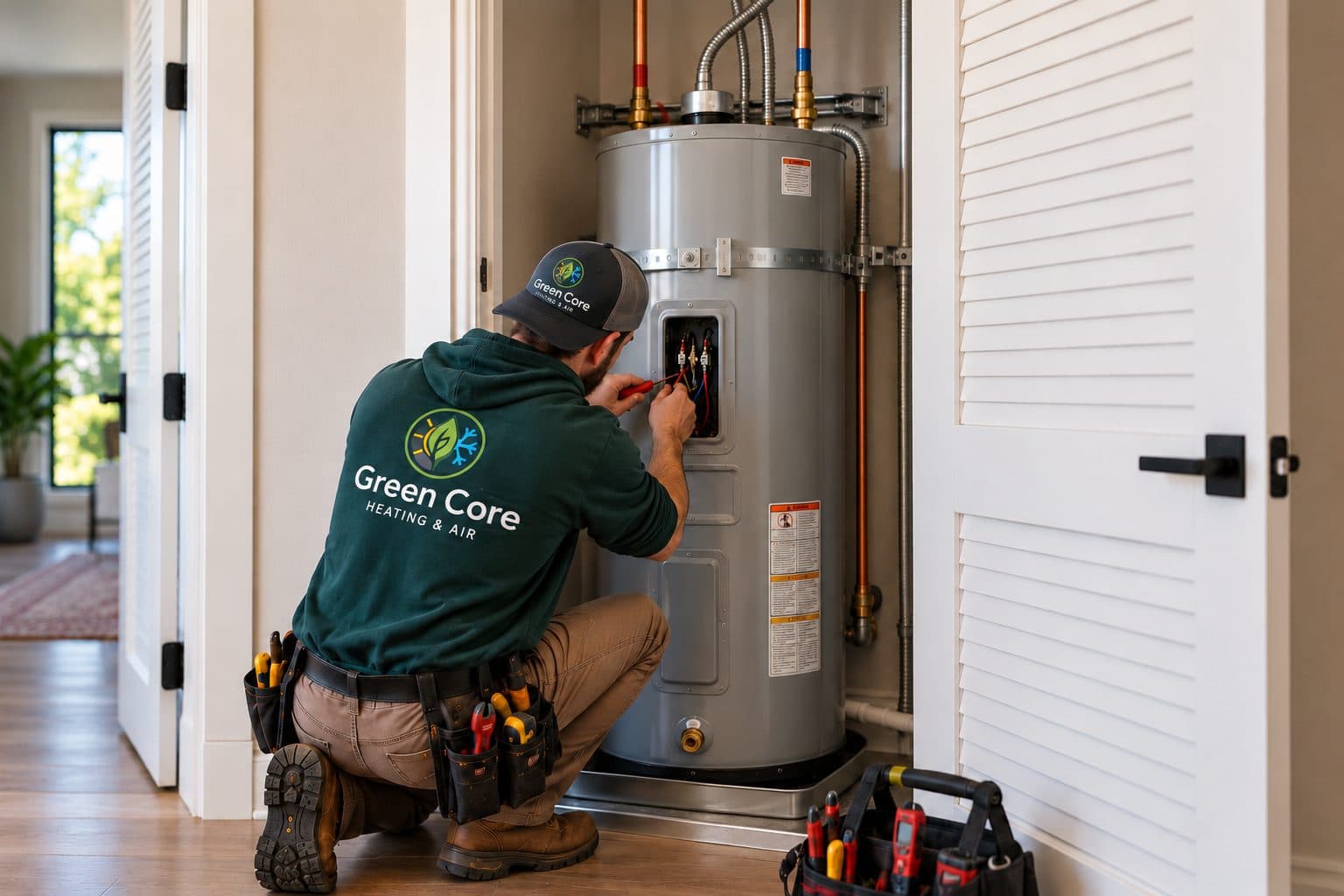
Short answer: switching from a gas water heater to an electric one mostly changes four things: the electrical supply, the venting, the gas line, and the space the new unit needs. Many homes can make the switch without trouble. Some need a new 240-volt circuit or a panel check first, and we sort that out at a free in-home estimate before you commit.
Why homeowners switch from gas to electric
Most people we talk to switch for one of three reasons. They are heading toward an all-electric home, their gas water heater is at the end of its life, or they want the lower running cost of a heat pump model.
Electric tank water heaters are the simplest option. Heat pump water heaters use less electricity to make the same hot water, but they have a few extra space needs. We cover both kinds below.
What changes with the electrical
A gas water heater needs very little electricity. An electric one needs a dedicated 240-volt circuit, the same kind of circuit a dryer or range uses.
If you don't have a spare circuit near the heater, we add one. That means running wire from your panel and checking that the panel has room and capacity for the new load.
- Panel space. The panel needs an open slot for the new breaker.
- Panel capacity. In some older homes, the panel is already near its limit and may need work.
- Wire run. The distance from the panel to the heater affects the labor involved.
This is the biggest "it depends" in a gas-to-electric switch, and it is the first thing we look at.
What happens to the venting and gas line
A gas water heater has a flue that carries exhaust out of the house. An electric unit makes no combustion exhaust, so it doesn't need one. When we switch you over, the old flue is removed or properly closed off.
The gas line to the old heater is capped safely and to code. If other gas appliances in your home still use the same line, those stay in service.
Removing combustion from a closet or garage is a real benefit. There is no pilot light, no flue draft to worry about, and no gas burner inside a small space.
Space and placement
An electric tank is about the same size as a gas tank, so it often fits the same spot. A heat pump model is different. It is usually taller, and it pulls warmth from the air around it, so it needs breathing room.
| Electric tank | Heat pump water heater | |
|---|---|---|
| Electrical | Dedicated 240-volt circuit | Dedicated 240-volt circuit |
| Venting | None needed | None needed |
| Space and airflow | Similar to a gas tank | Needs room around it and ceiling clearance |
| Condensate drain | Not needed | Needed |
| Running cost | Higher | Lower |
A tight closet with a solid door can starve a heat pump model of air. A garage or larger utility room works well. If your heater lives in a small closet, we may recommend a standard electric water heater or a different location.
What about cost and rebates?
Standard gas or electric tank water heater replacement starts at $2,850. Switching fuels usually adds work, such as a new circuit or a capped gas line, so a gas-to-electric job is priced to your home. Heat pump models cost more up front and are also priced to your home after a free estimate.
Rebates may be available through programs like TECH Clean California, BayREN, and Sonoma Clean Power, depending on program funding. Amounts and rules change during the year, so we check what's open when we quote your job and handle the paperwork. You can see the current program details on the official TECH Clean California site. The federal 25C tax credit ended for systems installed after December 31, 2025.
Common questions
Will my electric bill go up if I switch from gas?
Your electric bill will go up, and your gas bill will drop by what the water heater used. The net result depends on which model you choose. A heat pump water heater uses far less electricity than a standard electric tank.
Do I need a new electrical panel?
Not always. Many homes just need a new 240-volt circuit and a breaker. We check your panel at the estimate and tell you plainly if more work is needed.
How long does the switch take?
Often about a day when the electrical is straightforward. Adding a circuit, a drain, or moving the unit can add time.
Can I keep my gas furnace and still switch the water heater?
Yes. The water heater is its own appliance. Switching it doesn't change how your furnace runs, and the gas line stays in place for anything still using it.
Thinking about a gas to electric water heater switch in Sonoma or Marin? Call Green Core at (707) 988-5858 or request a free estimate.